Perimenopause and Menopause Care
The years around menopause can change sleep, mood, cycles and comfort long before periods stop. Here is how Med Matrix approaches them, from the first conversation onward.
Two words that get used loosely
Menopause is the point in life when periods stop and pregnancy is no longer possible. The stretch leading up to it is perimenopause, also called the menopausal transition. It usually begins in a woman's forties, and sometimes earlier.
The hormone shifts of that transition are what cause the familiar symptoms. Because perimenopause can run for years before the last period, many women spend a long time wondering whether what they feel is hormonal, stress, age, or something else entirely.
Symptoms worth naming at your visit
The National Library of Medicine lists these among the symptoms of menopause. Several of them rarely come up unless you raise them, so write them down before the drive:
- Changes in your periods: timing, flow, or skipped cycles.
- Hot flashes, including at night.
- Trouble sleeping, even on nights without sweats.
- Mood changes that feel out of character.
- Vaginal dryness, or pain during sex.
- Bladder issues, such as urgency or more frequent trips.
Why the panel is wider than a hormone check
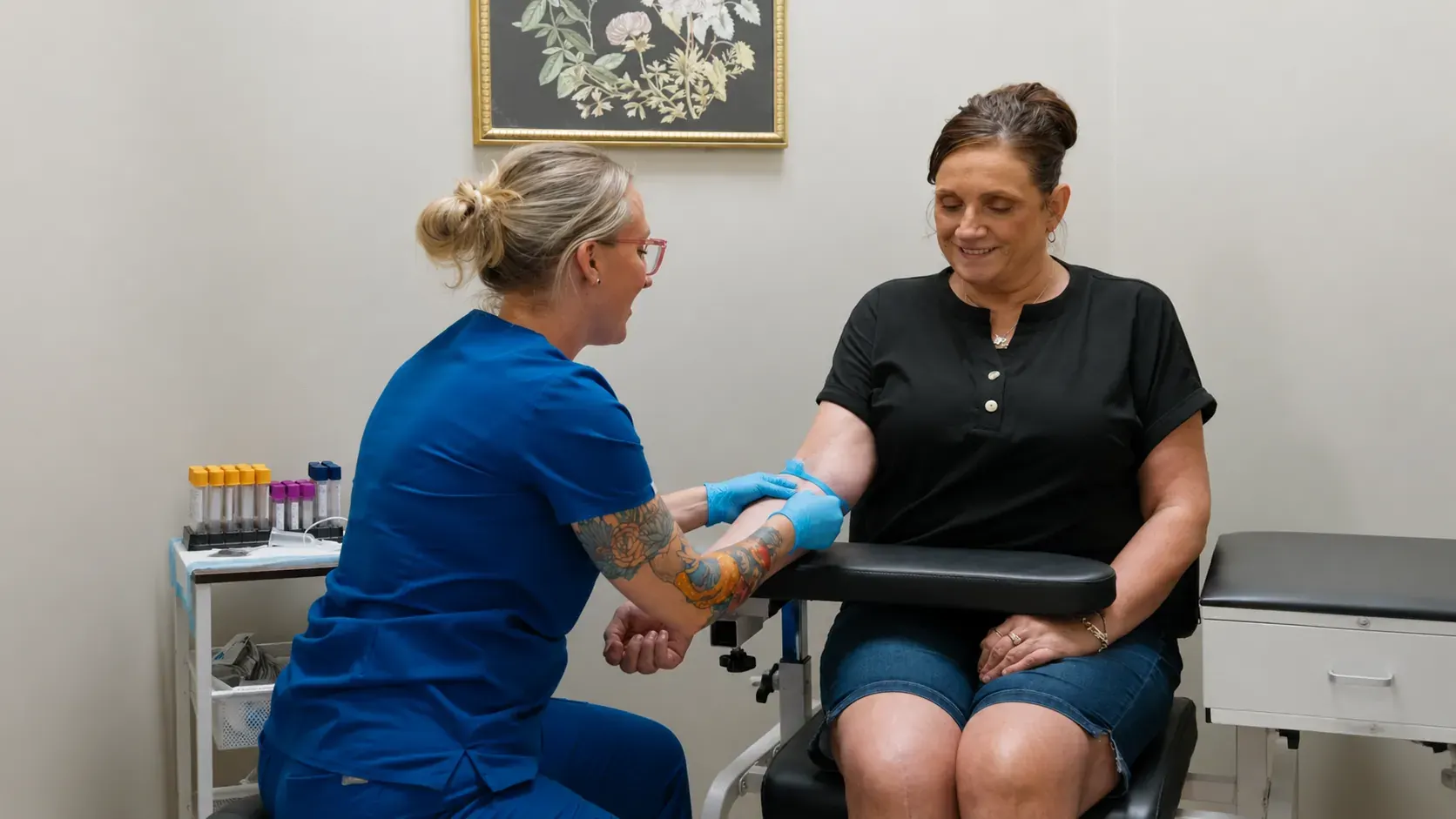
Symptoms in midlife do not come labeled with their cause, so the baseline draw looks at more than one system. The sex-hormone markers (estradiol, progesterone, FSH, LH, prolactin, DHEA-sulfate, total and free testosterone, and SHBG) sit on the same draw as a full thyroid panel, cortisol, fasting glucose and insulin, and a cardiac panel that includes ApoB and Lp(a) by default.
Your provider then reads those results against ranges set for you, alongside your symptoms. A value inside the lab's printed range is not the end of the conversation, and a single number is never read on its own.
What the hour-long consultation is for
The first consultation runs a full sixty minutes, which is time to cover the things a short appointment skips: how your cycles have changed, what sleep looks like now, family history, every medicine and supplement you take, and what you want from care.
You leave with a plan built from your own results. For some women that plan includes hormone therapy. For others it does not, and the reasons are explained either way.
Hormone therapy is one option among several
The Menopause Society describes hormone therapy, often called hormone replacement therapy (HRT), as the most effective treatment for hot flashes and night sweats, and for the vaginal and urinary symptoms of menopause. It is still not the only route. The HHS Office on Women's Health lists FDA-approved non-hormone medicines for moderate to severe hot flashes, and talk therapies such as cognitive behavioral therapy that can reduce how much hot flashes bother you.
If hormone therapy is not a fit for your history, say so at the visit and ask what else is on the table. The forms and risks are covered in HRT options and safety.
Perimenopause questions
What symptoms should I bring up at my first visit?
All of them, including the ones that seem unrelated. Period changes, hot flashes, poor sleep, mood changes, vaginal dryness and bladder issues are all on the National Library of Medicine's list. Put them on your list of what to bring.
Can perimenopause start before my forties?
It can. The National Library of Medicine says the transition usually begins in a woman's forties, and sometimes earlier. If your cycles, sleep or mood shifted before then, raise it. Your provider reads those symptoms with a panel that includes FSH, LH, estradiol and progesterone, never one result alone. See how to tell perimenopause from menopause.
198 Maine Mall RoadMed Matrix, South Portland, ME 04106